Tuesday, 20 February 2018

Non-profit generic drug company created

Various medicine pills and capsules
Intermountain Healthcare is leading an effort in the US to prevent drug shortages and end their skyrocketing prices

A new, not-for-profit generic drug company has been launched to address the problem of critical drug shortages and skyrocketing prices for pharmaceuticals in the US. The effort is being led by Intermountain Healthcare, a non-profit health system based in Salt Lake City, Utah, together with two other US healthcare systems and in consultation with the US Department of Veterans Affairs. Intermountain hopes to help finance the venture through donations and philanthropic activity.
Inauguration  Invitation 2016
9-camp-w
11-camp-w
The FDA approved 46 new drugs last year – the highest number in over two decades – due to factors like streamlined policies at the agency
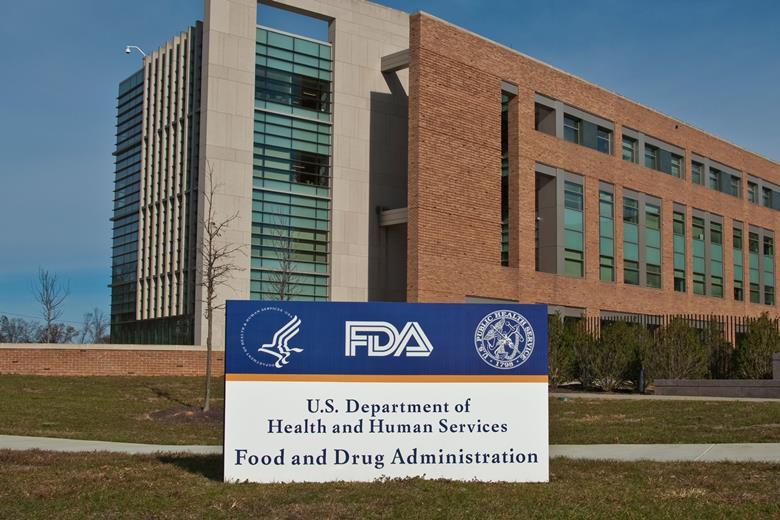
FDA Building 21 stands behind the sign at the FDA campus main entrance and houses the Center for Drug Evaluation and Research.
Source: © United States Government
The US Food and Drug Administration (FDA) approved 46 new drugs in 2017, which is the highest number in 21 years and more than twice the number approved in 2016. From 2008 through 2016, the agency has pushed through the door on average about 31 novel drugs per year – the previous record was 53 approvals in 1996. In comparison, theEuropean Medicines Agency approved 35 medicines that had a new active substance in 2017.
‘We are seeing in the US a real explosion in oncology drugs and continued growth in drugs for rare disease, and those are driven by a combination of things like the science, the FDA policies that streamline some of the regulatory processes for these types of drugs, and also the economics,’ says Frank David, who is managing director of the Massachusetts-based biotechnology consulting firm Pharmagellan.
‘Although the fact that more drugs are proving that they are safe and effective enough to get approved by the FDA is certainly a good thing, I am just not sure that the number is that significant,’ David adds. ‘I am not sure that one point makes a trend.’ Drug companies are certainly using the FDA’s accelerated review mechanisms to their advantage, but these tools do not appear to be driving a greater volume of drugs through the pipeline he says.
‘The numbers are not particularly related to specific FDA policies,’ David asserts. However, he describes the FDA as overall more communicative with companies, which has led to better-designed clinical trials that are more likely to succeed, and drugs that are more likely to be approved. In addition, David says there is greater openness at the agency lately to approving drugs based on things like more creative trial designs and surrogate endpoints. ‘There are a lot of things going on that mean the system is getting better at getting drugs that work and are safe through the regulatory process,’ he states.

FDA oks 80% of drug applications

The proportion of drugs submitted to the FDA that receive approval is surprisingly high. This is mostly because a company has plenty of chances to fail, like during Phase III clinical trials, before it gets to the point of submitting a new drug application to the agency. Therefore, David suggests that the jump in new drug approvals in 2017 is not due to less rigour in the FDA’s review processes.
It is too early to say if this is a part of a trend of just a blip
‘The baseline percentage of new drug applications approved by the FDA, which hasn’t really changed much in several years, is upwards of 80%, so there is just not the room to be more lax,’ David says. ‘A more likely explanation for the spike in 2017 is that more drugs were submitted to the agency for approval,’ he states. ‘It is too early to say if this is a part of a trend of just a blip.’
For its part, the FDA suggests that many variables could lead to a high number of drug approvals, including the number of applications received the previous year, the quality of the applications submitted in 2017, and the characteristics of the new products resulting in opportunities to use expedited programmes.
Over time, the FDA says it has consistently used a variety of expedited review and approval tools to help ensure that applications for promising new therapies in areas of unmet need are handled as efficiently as possible. For instance, from 2011 through 2017 about 60% of the agency’s novel drug approvals were approved using one or more expedited review tools.

Air pollution study finds VOC emissions from everyday products have been hugely underestimated
Hairstyling process using hairspray in a beauty salon
Source: © BodiaPhoto / Shutterstock
The use of everyday chemical products like cosmetics and cleaning agents contribute to half of all fossil fuel-derived volatile organic compounds (VOCs) emitted in urban areas, according to a new analysis.
This contradicts current estimates from the US Environmental Protection Agency which say 75% of these emissions come from fuel-related sources such as vehicles, with only about 25% from chemical products.
‘We found that the use of these products emit VOCs in a magnitude that is comparable to what comes out of the tailpipe of your car,’ said Brian McDonald, an environmental scientist at the University of Colorado in Boulder who presented the findings at the annual meeting of the American Association for the Advancement of Science in Austin, Texas.
His team’s results suggest that VOC emissions from household and industrial chemicals are actually two or three times greater than current air pollution inventories estimate.
‘In some ways this is a good news story,’ McDonald stated, noting that the US air quality regulations in the US and Europe have been very successful in reducing motor vehicle controlling emissions. ‘As we control some of the biggest sources of air pollution in the past, other sources are emerging in relative importance, such as the use of these everyday chemical products.’
VOCs contribute to urban air quality challenges like the formation of ground-level ozone and fine particles, both of which pose significant human health and environmental concerns.
The discovery was somewhat accidental, as the researchers were originally compiling measurements of hydrocarbon emissions associated with gasoline and diesel fuel use. While doing this, they noticed that levels of other less commonly measured gases, like ethanol, were higher than expected and had increased in recent decades.
Although ethanol is commonly added to gasoline in the US, the researchers determined that gasoline-related sources could only account for about 20% of the ethanol that they measured in the air. ‘That suggested that we were missing an important source of this compound in the atmosphere,’ said Jessica Gilman, a chemist at the National Oceanic and Atmospheric Administration who also worked on the study. Further work pointed to the use of everyday consumer products as a major source of these VOCs.
Responding to the announcement of these findings, the American Cleaning Institute (ACI) lobby group argued they ‘need to be put into the context’ of the changes manufacturers have made to these products over the years.
The organisation said laundry and dishwashing products, for example, have a minimal impact on VOC emissions overall because they use ingredients that biodegrade during wastewater treatment. ACI also pointed to the researchers’ acknowledgement in the published study that most organic compounds in soaps and detergents dissolve in water and end up in sewer systems, with negligible amounts emitted from wastewater treatment plants.